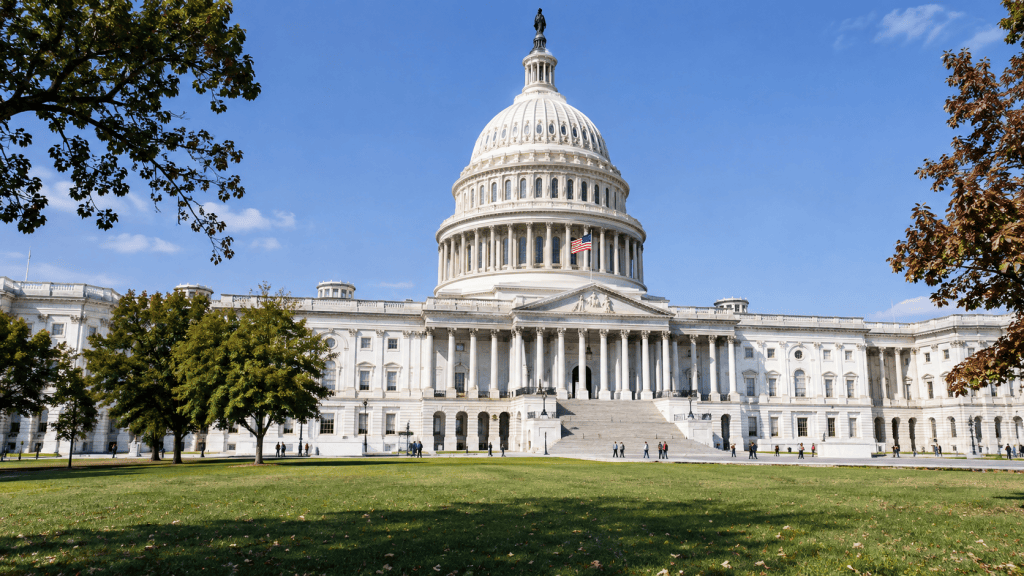
WASHINGTON, D.C. — November 6, 2026
Democrats are set to take control of both chambers of Congress when the new Congress convenes in January 2027, following the November 3 midterm elections. The shift changes the balance of power in Washington and sets up a new period of congressional oversight, negotiations and debate over federal policy.
What the election results show
The Associated Press called Democratic control of the Senate at 11:36 p.m. Eastern on November 3 and called the House for Democrats at 1:24 a.m. on November 4. The calls mean Democrats are projected to hold majorities in both chambers of the 120th Congress.
As of 5:02 p.m. Eastern on November 5, CQ Roll Call’s race tracker reported that Democrats had flipped 42 House seats and seven Senate seats, while Republicans had picked up two House seats. Some individual races were still being tracked, so final seat totals may change as results are completed.
What changes when Congress changes hands?
Control of the House and Senate affects which party organizes each chamber, sets committee leadership and determines what legislation receives consideration. The majority party in the House generally selects the Speaker and committee chairs. In the Senate, the majority has greater influence over the chamber’s agenda and committee leadership, subject to Senate rules and agreements.
Democratic control of both chambers is expected to increase congressional scrutiny of the Trump administration. Congressional committees can hold hearings, request documents and conduct investigations as part of their oversight responsibilities. The extent and focus of that oversight will depend on decisions made by lawmakers and committee leaders.
Does this mean Democrats can pass any law they want?
No. A bill generally must pass both the House and Senate and be presented to the president. The president can sign it or veto it; Congress can override a veto only with the constitutionally required two-thirds vote in each chamber. Senate rules, including the use of the legislative filibuster for many bills, can also affect what advances.
That means the election changes who controls Congress, but it does not remove the constitutional checks built into the lawmaking process. Negotiations between congressional leaders and the White House will remain important for legislation that requires presidential approval.
What happens next?
The new Congress is scheduled to begin in January 2027. House members will organize and choose a Speaker, while senators will set their leadership and committee structure. Lawmakers will then face decisions involving federal spending, oversight, nominations and the policy issues they choose to prioritize.
The practical effects of the new congressional balance will become clearer as the incoming leadership announces its agenda and the two parties respond to one another’s proposals.
The Shade Wire asks
With control of Congress changing in January, which issues should lawmakers address first: the economy and cost of living, healthcare, immigration, government spending, or another issue? Share your perspective respectfully in the comments.
Sources
- The Associated Press — Calling control of Congress in the 2026 midterm elections (November 5, 2026)
- CQ Roll Call — Key midterm election results (updated November 5, 2026)
- Reuters — Democrats flex congressional majorities as Trump accepts electoral losses (November 4, 2026)
The Shade Wire is committed to reporting political developments with clear sourcing and without endorsing a political party or candidate.


